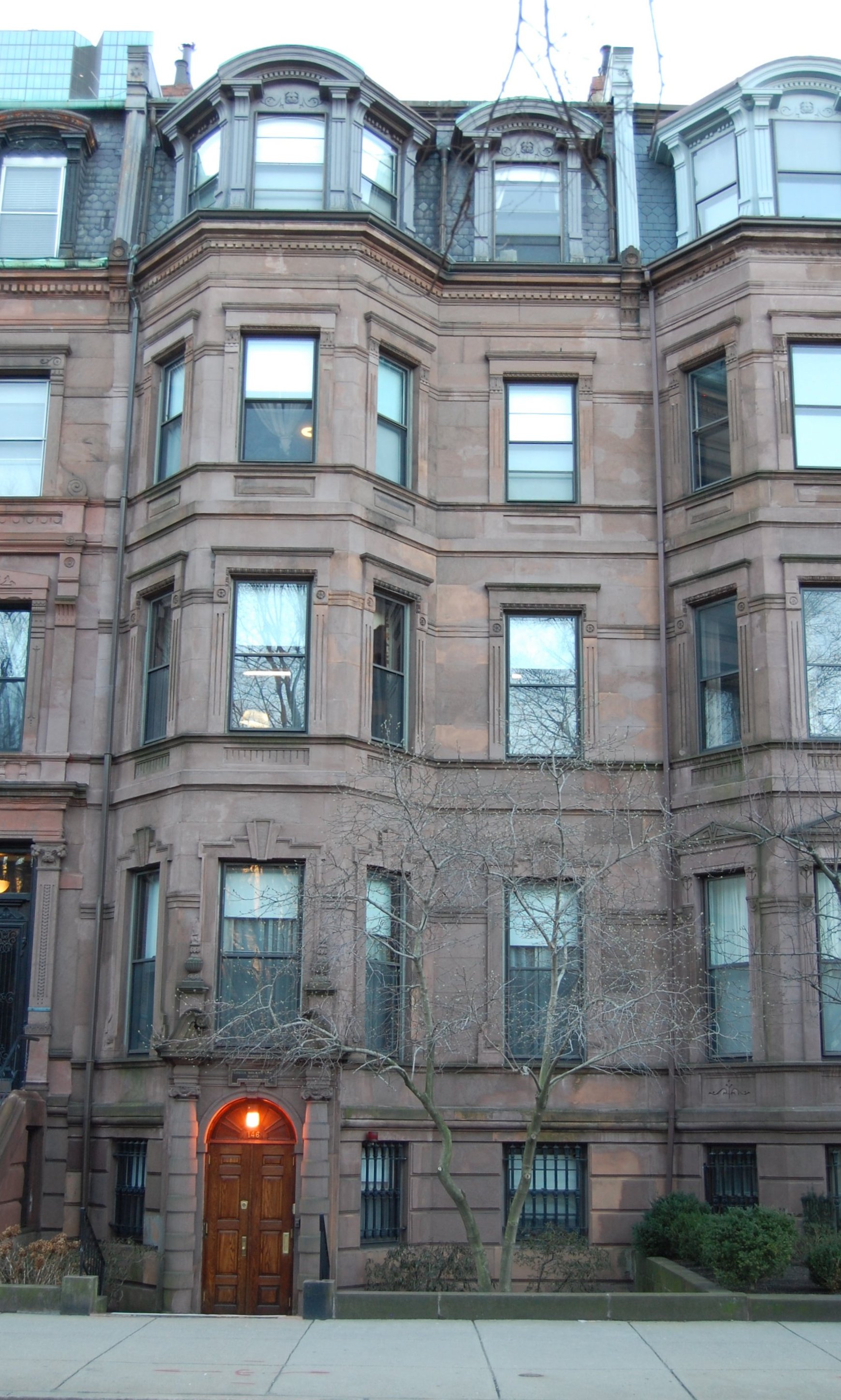
146 Commonwealth (2013)
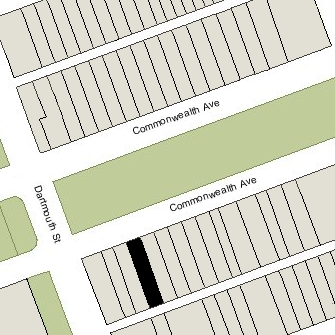
Lot 26′ x 124.5′ (3,237 sf)
146 Commonwealth is located on the south side of Commonwealth, between Clarendon and Dartmouth, with 144 Commonwealth to the east and 148 Commonwealth to the west.
146 Commonwealth was designed and built in 1876-1877 by architect and builder George W. Pope, one of two contiguous houses (146-148 Commonwealth). In 1880, he designed and built a third house in a similar style at 144 Commonwealth.
146 Commonwealth was built as the home of leather manufacturer and merchant Stephen Everett Westcott and his wife, Abbie Ann (Fuller) Westcott. He is shown as the owner on the original building permit application, dated May 15, 1876, and on the final building inspection report, dated October 12, 1877. The house was shown as 136 Commonwealth on both documents.
Stephen Wescott purchased the land for 146 Commonwealth on February 29, 1872, from the Commonwealth of Massachusetts.
Click here for an index to the deeds for 146 Commonwealth, and click here for further information about the land between the south side of Commonwealth and Alley 435, from Clarendon to Dartmouth.
By the 1877-1878 winter season, Stephen and Abbie (Fuller) Westcott had made 146 Commonwealth their home. They previously lived at 119 West Chester Park (which later became 468 Massachusetts Avenue).
In 1882, they built a stable at 346 Newbury, designed and built by George W. Pope. It remained in the Westcott family until 1902.
Stephen Westcott died in February of 1892. In his will, he specified that the bulk of his estate, including 146 Commonwealth, was to be held in trust for the benefit of Abbie Westcott and their only surviving child, Edith Westcott.
Edith Westcott married in June of 1893 to Francis Wright Fabyan, a cotton and dry goods merchant in his family’s firm, Bliss, Fabyan & Co. After their marriage, they lived at 148 Commonwealth.
Abbie Westcott continued to live at 146 Commonwealth until her death in March of 1901.
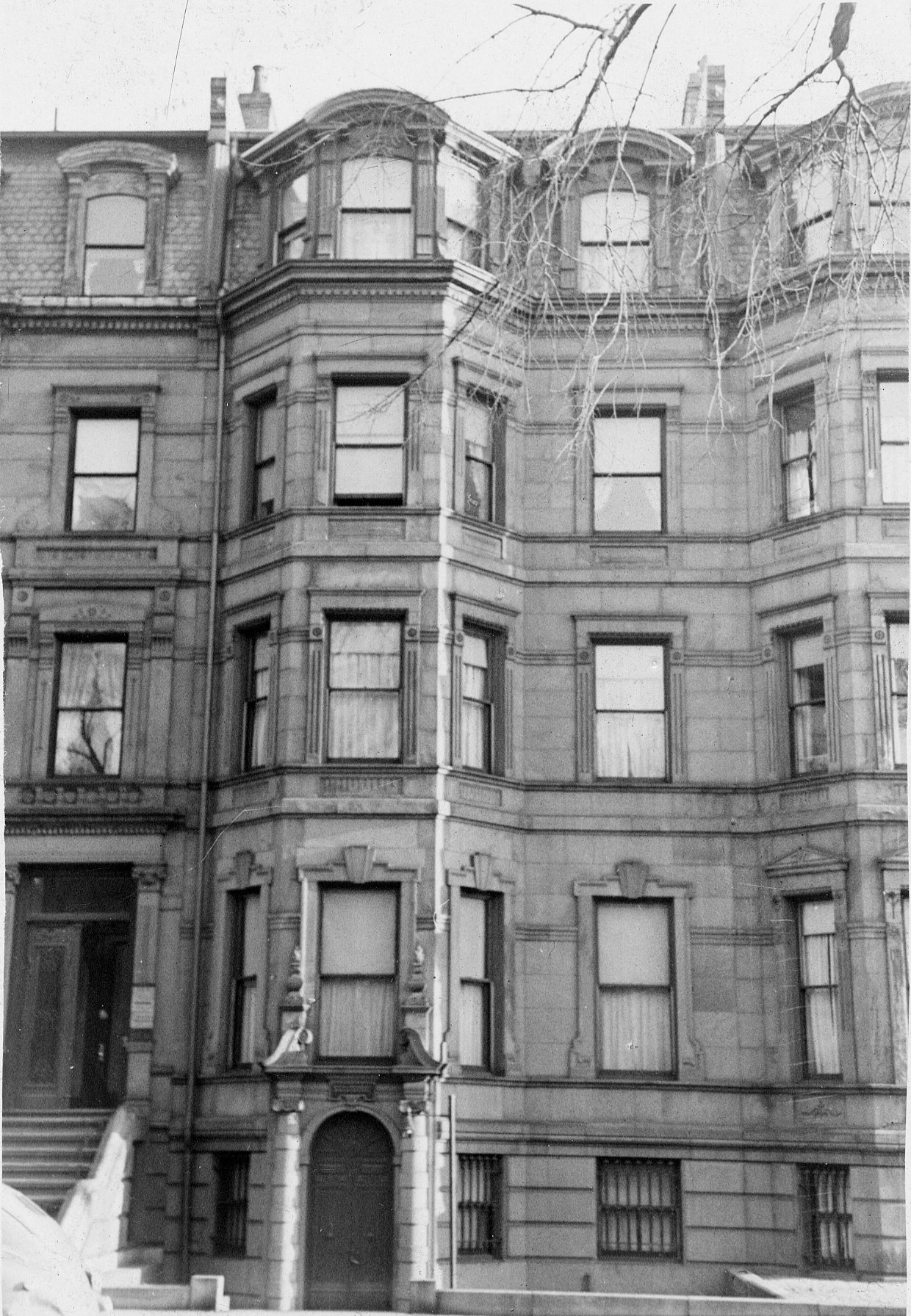
146 Commonwealth (ca. 1942), photograph by Bainbridge Bunting, courtesy of The Gleason Partnership
By the 1901-1902 winter season, Francis and Edith (Westcott) Fabyan had made 146 Commonwealth their home. It continued to be owned by the trust established under Stephen Westcott’s will. The Fabyans had lived at 222 Beacon during the previous season. They also maintained a home in West Manchester, Massachusetts.
Francis and Edith Fabyan raised their four children at 146 Commonwealth: Eleanor Fabyan, Everett Wright Fabyan, Edith Fabyan, and Francis Wright Fabyan, Jr.
In 1910, the Fabyans built a home in Buzzards Bay (near Bourne). They also continued to maintain their residence in West Manchester.
On June 1, 1911, the Boston Herald reported that Francis Fabyan had been granted a permit to make alterations at 146 Commonwealth. On August 11, 1911, the “Table Gossip” column in the Boston Globe described the work being done: “Mr and Mrs Francis W. Fabyan of 146 Commonwealth av are having alterations made to their town house which include a dancing apartment where small house affairs may be held for their two daughters, the Misses Eleanor and Edith Fabyan, who are not yet out in society. The front entrance of the house is being changed by removing the flight of steps and bringing the front door down to the level of the street.”
The remodeling was designed by architect Arthur Little, of the firm of Little and Browne. He and his wife Jessie Maria (Whitman) Means Little, had lived at 148 Commonwealth, during the 1909-1910 winter season after remodeling it earlier in 1909.
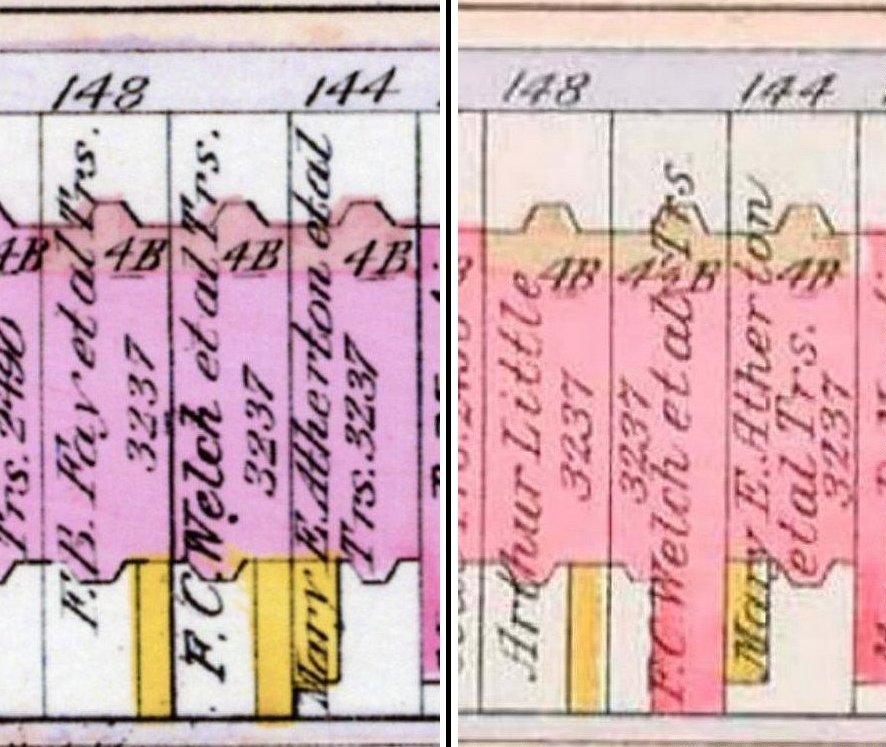
1908 and 1912 Bromley maps, showing new rear ell and increase from 4 stories and a basement to 4½ stories and a basement.
In addition to significant interior remodeling and lowering the front entrance to street level, the 1911 alterations of 146 Commonwealth also included construction of a penthouse on the rear half of the house and replacement of the wooden ell in the rear with a one story brick ell.
Little and Browne displayed photographs of several of the rooms remodeled in 1911 at an exhibition sponsored by the Boston Society of Architects and Boston Architectural Club in May of 1929. The display prints are included in the Little & Browne Portfolio in the Prints and Photographs collection of the Boston Athenaeum.
Eleanor Fabyan married in November of 1915 to Theodore Frothingham, Jr., a cotton broker. He previously had lived at 140 Beacon. After their marriage, they lived at 7 Chestnut and then in Washington DC. In January of 1920, they returned to Boston and lived at 19 Commonwealth.
In May of 1917, Edith Fabyan married to William Augustus Read, Jr. He had withdrawn from Harvard to serve in the US Navy as an aviator. During his service, they lived at 146 Commonwealth with her parents; their son, William Augustus Read, III, was born there in May of 1918. After the war, they lived in Purchase, New York, and he was a investment banker in New York City.
Everett Fabyan withdrew from Harvard to serve in the US Navy during World War I and then returned to complete his studies. He married in May of 1919 to Frances Pearsall Field of New York City. After their marriage, they lived in New Bedford where he was a cotton broker.
Francis Fabyan, Jr., continued to live with his parents at 146 Commonwealth. The Fabyans continued to maintain homes in West Manchester and at Buzzards Bay.
Edith Fabyan died in December of 1928. Under Stephen Wescott’s will, after her death, the half of the property held by the trust was to be distributed to her children, and the other half was to be distributed as she directed in her will. Accordingly, on February 15, 1929, the trustees transferred ownership of 146 Commonwealth to Henry Meyer of Belmont to the use of Edith (Westcott) Fabyan’s four children (one-eighth undivided interest each) and to Robert H. Gardiner (one-half undivided interest), as trustee named under Edith Fabyan’s will.
Francis Fabyan, Jr., subsequently made his home in Bourne and then in Osterville.
In February of 1930, Francis Fabyan married again, to Annabel Park of 31 Gloucester, where they lived after their marriage.
146 Commonwealth was shown as vacant in the 1930-1934 Boston City Directories.
On December 20, 1933, 146 Commonwealth was purchased from the Fabyan family by the Trustees of Boston University, acquired for use by the Boston University Women’s Council. A September 1, 1934, Boston Globe article on the property noted that it would be used “as an administration and social center for women’s activities, with a limited residence for Boston University women.” In 1950, the the house was named Fisk House in honor of Louisa Holman Fisk, founder and first president of the Council.
In July 2, 1935, the BU Women’s Council applied for (and subsequently received) permission to remodel the house, converting it from a single family dwelling to a lodging house.
In July of 1980, the Trustees of Boston University applied for (and subsequently received) permission to change the legal occupancy from a lodging house to a dormitory for 20 persons, indicating that “the actual use and occupancy will remain unchanged; no work will be required at this time.”
146 Commonwealth remained a residence for Boston University women graduate students until 2020. In February of 2020, the BU Women’s Council merged with the BU Women’s Guild and Fisk House was relocated to 193 Bay State Road.
On August 26, 2021, 146 Commonwealth was purchased from the Trustees of Boston University by Allison O’Neil, trustee of the 146 Commonwealth Avenue Nominee Trust.
In October of 2022, the trust received permission to remodel the 146 Commonwealth from a dormitory into a single-family dwelling, including rebuilding the existing rear ell into a garage and adding a roof deck with solar panels.
146 Commonwealth was assessed as a single-family dwelling in 2024.

144-148 Commonwealth (2013)
 Back Bay Houses