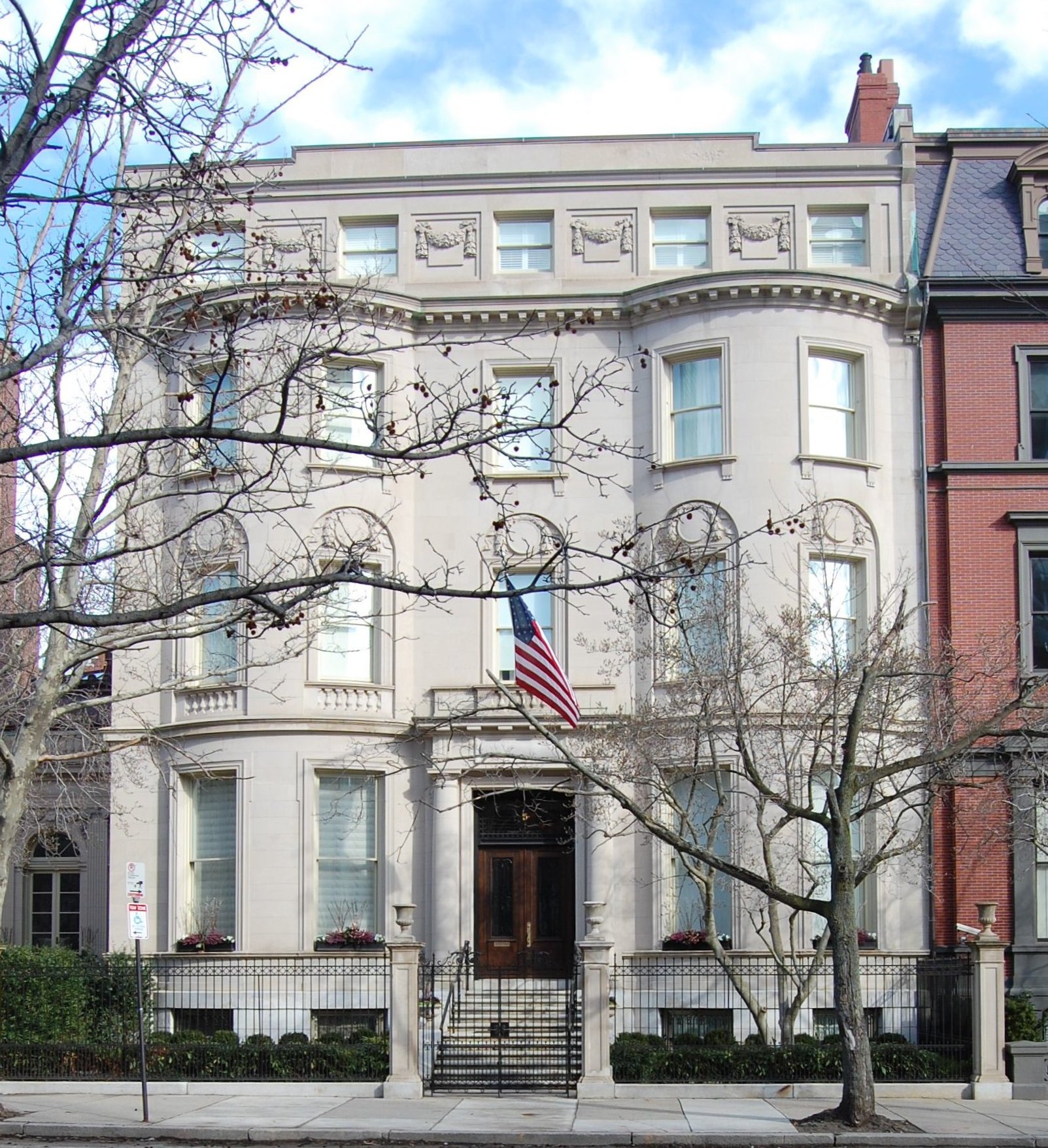
5 Commonwealth (2013)
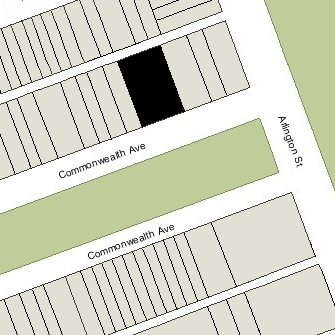
Lot 80′ x 124.5′ (9,960 sf)
5 Commonwealth is located on the north side of Commonwealth, between Arlington and Berkeley, with 3 Commonwealth to the east and 7 Commonwealth to the west.
5 Commonwealth was built ca. 1861, one of a pair of academic brick houses (3-5 Commonwealth) built at the same time in a symmetrical design, each with a bay extending through the mansard roof. 3 Commonwealth was built on a lot with a 50 foot frontage, and 5 Commonwealth on a lot with an 80 foot frontage. The houses were about the same width, with 5 Commonwealth slightly larger and the western portion of the lot – about 20 feet wide — left open. Both houses included stables at the rear of the property.
5 Commonwealth was built as the home of cotton manufacturer and merchant Abbott Lawrence and his wife Harriette White (Paige) Lawrence. 3 Commonwealth was built for his brother-in-law and sister, Benjamin Smith Rotch and Annie (Lawrence) Rotch.
Both men purchased the land on which the houses were built from the Commonwealth of Massachusetts on May 2, 1860 (although Abbott Lawrence’s deed was not recorded until February 28, 1893, shortly before his death). The Lawrences previously had lived at 24 Summer and also maintained a home in Nahant.
Click here for an index to the deeds for 5 Commonwealth, and click here for further information about the land between the north side of Commonwealth and Alley 422, from Arlington to Berkeley.
Abbott and Harriette Lawrence raised their six children at 5 Commonwealth: Abbott Lawrence, Jr., Rosamond Lawrence, William Paige Lawrence, John Lawrence, Robert Ashton Lawrence, and Harriette Story Lawrence.
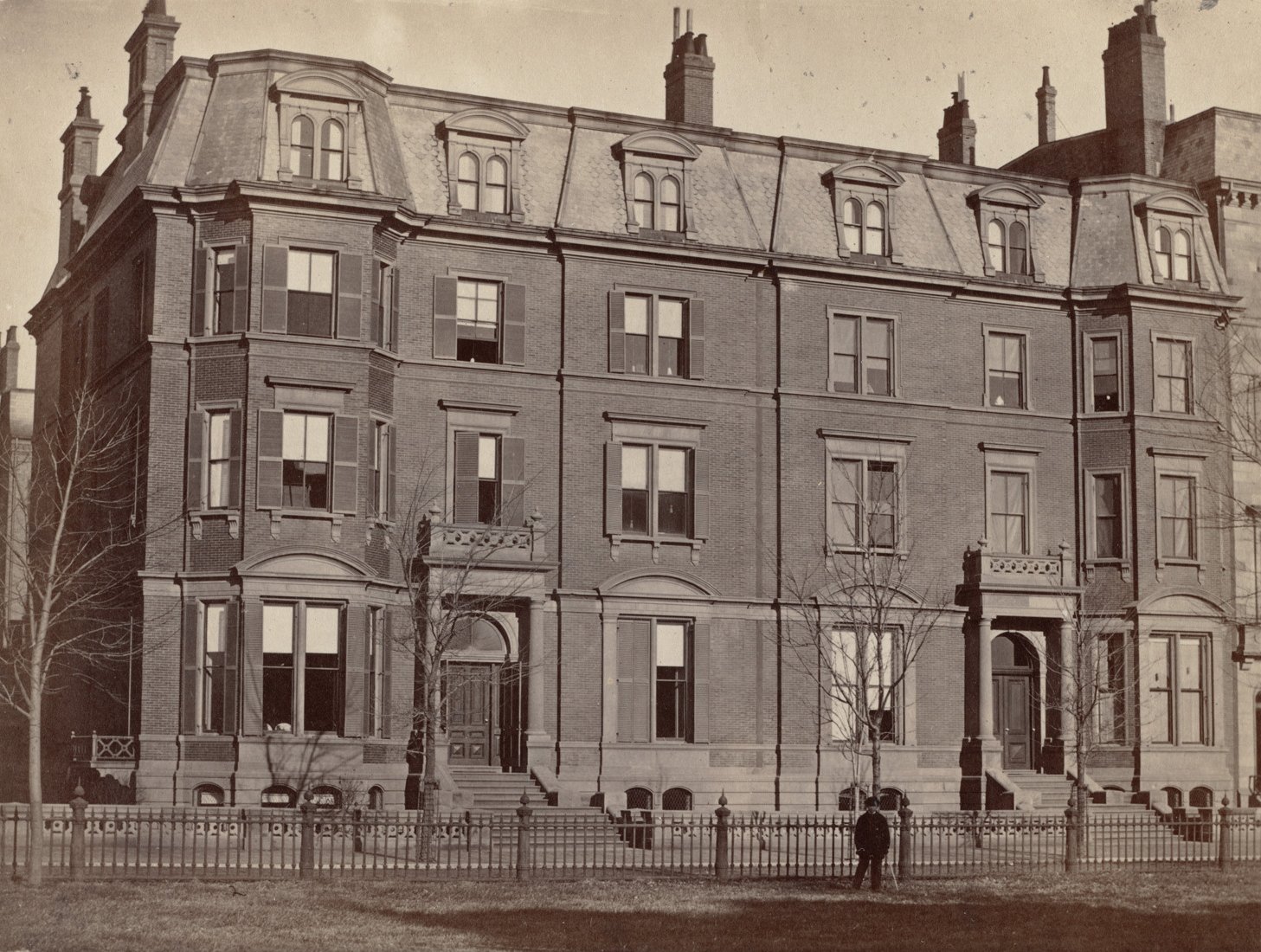
3-5 Commonwealth (ca. 1870), photograph by Frederick M. Smith, II; courtesy of the Print Department, Boston Public Library
Abbott Lawrence, Jr., graduated from Harvard in 1875 and Harvard Law School in 1877, after which he practiced law in Boston. He lived at 5 Commonwealth until his death in March of 1882.
Rosamond Lawrence married in January of 1881 to attorney Francis Peabody of Salem. After their marriage, they lived at 251 Beacon.
William Paige Lawrence purchased a farm in Groton in 1885 and subsequently made it his primary residence, living at 5 Commonwealth when in Boston. He died in February of 1898.
John Lawrence, a trustee of estates, married in June of 1887 to Martha Endicott Peabody, the sister of Rosamond (Lawrence) Peabody’s husband, Francis Peabody. After their marriage, the lived in Groton.
Robert Ashton Lawrence moved to Groton in 1892. He married in October of 1893 to Caroline Emma Hastings. They later lived in Chestnut Hill.
Harriette Story Lawrence married in March of 1893 to Reginald Foster, an attorney. After their marriage, they lived at 44 Fairfield and then at 48 The Fenway.
Abbott Lawrence died in July of 1893. Harriette Lawrence continued to live at 5 Commonwealth until her death in February of 1903.
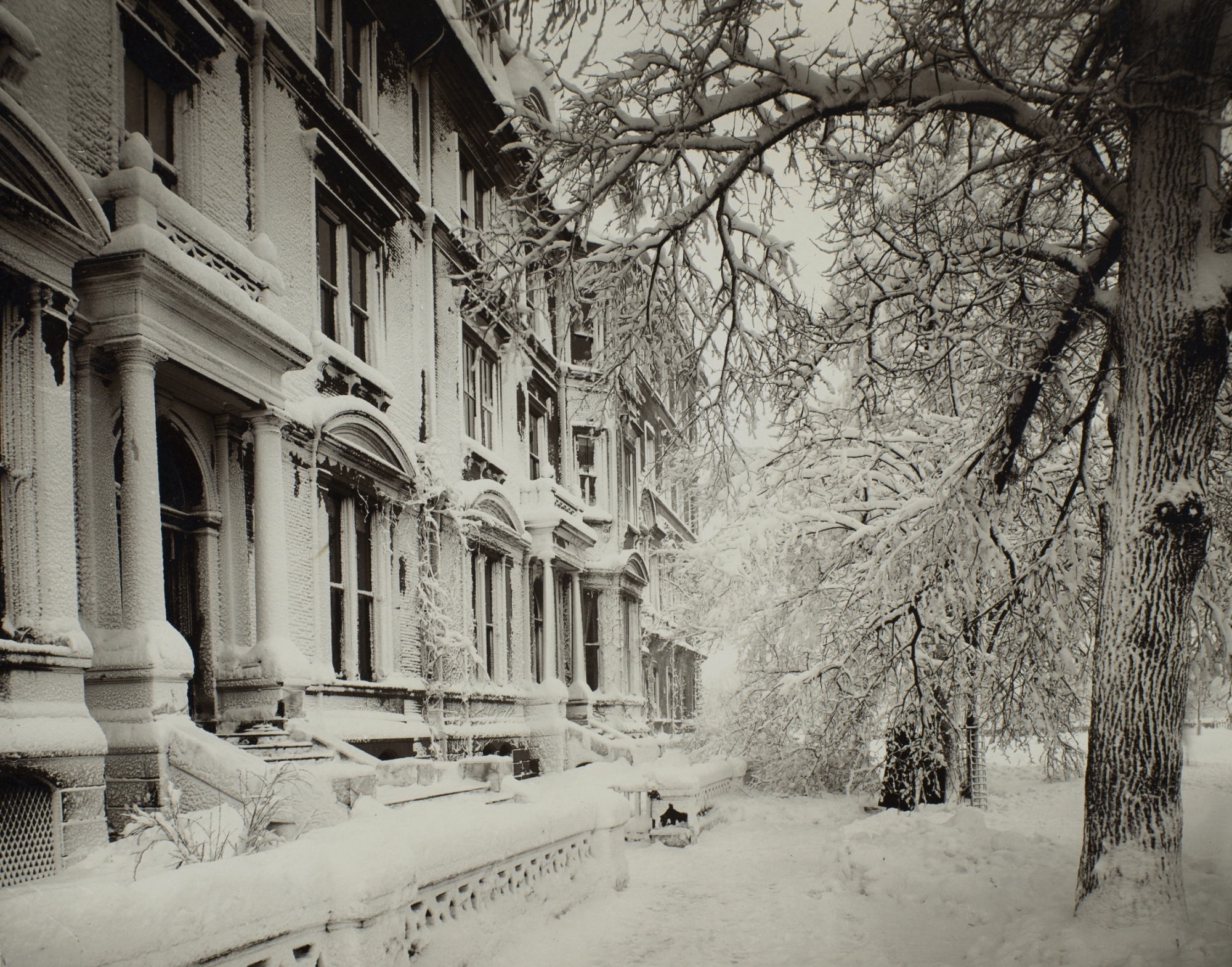
Looking east from 5 Commonwealth, taken in early February 1898; courtesy of the Boston Athenaeum (formerly a part of the Gardner Collection of Photographs, Harvard University Department of Geology)
On April 15, 1903, 5 Commonwealth was purchased from Abbott Lawrence’s estate by Walter Cabot Baylies and Richard Middlecott Saltonstall, trustees under the will of George Phineas Upham, formerly of 144 Beacon. The house was purchased to be the home of Walter Cabot Baylies and his wife, Charlotte (Upham) Baylies, George Upham’s daughter. They previously had lived at 61 Commonwealth. They also maintained a home in Nahant, which Charlotte Baylies had inherited from her father, and a home, Oxbow, in Taunton. Walter Baylies’s mother, Nathalie Elizabeth (Ray) Baylies, the widow of Edmund Lincoln Baylies, also maintained a home, Kippanwoods, in Taunton.
Walter Baylies was a cotton broker and wholesale dry goods merchant, and an investor in and director of numerous electric and gas utility companies, textile mills, banks, and railroads.
Walter and Charlotte Baylies had 5 Commonwealth completely rebuilt. The new house was designed by architect Arthur W. Rice of Peters and Rice, and included a ballroom on the formerly open lot to the west of the house. The new house was completed in late 1903.
Bainbridge Bunting’s Houses of Boston’s Back Bay (Appendix A) indicates that the Baylies home was built in 1912, but this is not correct.
On November 14, 1903, the Boston Post commented that “from an external point of view, the Baylies mansion is nearly completed, but internally it still looks rather chaotic, and another month or so will be required to straighten things out. Then the decorators will take it in hand and lend their best efforts toward making it one of the handsomest homes in America.”
The article described the house in some detail:
“The handsome structure is built after the Renaissance style of Indiana limestone, with foundation of granite. Upon either side of the wide entrance hall is a large apartment with a bay window fronting the avenue. The room at the left is to be used as a dining room and that on the right is the library. The drawing rooms are situated at the back of the house and adjoin the ballroom, which juts out beyond the structure on the left. This ballroom, it is prophesied, will be the handsomest in Boston when completed. At present, by general consent, Mr. and Mrs. Bryce J. Allan have been considered to possess the most beautiful ballroom in town [at 255 Beacon], but that of the Baylieses will eclipse it.
“Wide stairways and an elevator will both be used in the Baylies mansion as a method of transit from one floor to another. Mrs. Baylies’ sleeping room will be directly over the library. And adjoining it will be her boudoir with its lavish fitments. Next is Mr. Baylies’ room, over the dining room. On the top floor, with plenty of light streaming through its numerous windows, is the nursery…”.
On November 22, 1903, the Boston Post published an additional article, “The Handsomest Ballroom in Boston,” which augmented the description of the interior to note that “the guest rooms, each with its adjoining bath, are on the third floor.”
On February 21, 1904, the Boston Herald’s “Social Life” column noted that “Mr. and Mrs. Walter C. Baylies moved into their new house on lower Commonwealth avenue the middle of the week.” It appears that the interior of the ballroom may not have been completed by this point, inasmuch as the society columns for the 1904-1905 and 1905-1906 winter seasons appear to have made no reference to an event in the new space, and a December 2, 1906, “Table Gossip” note in the Boston Globe mentioned that the ballroom “was not quite ready for use last year, and some concerts were given in the spacious hall from which open out the drawing rooms and library. The room is now completed.”
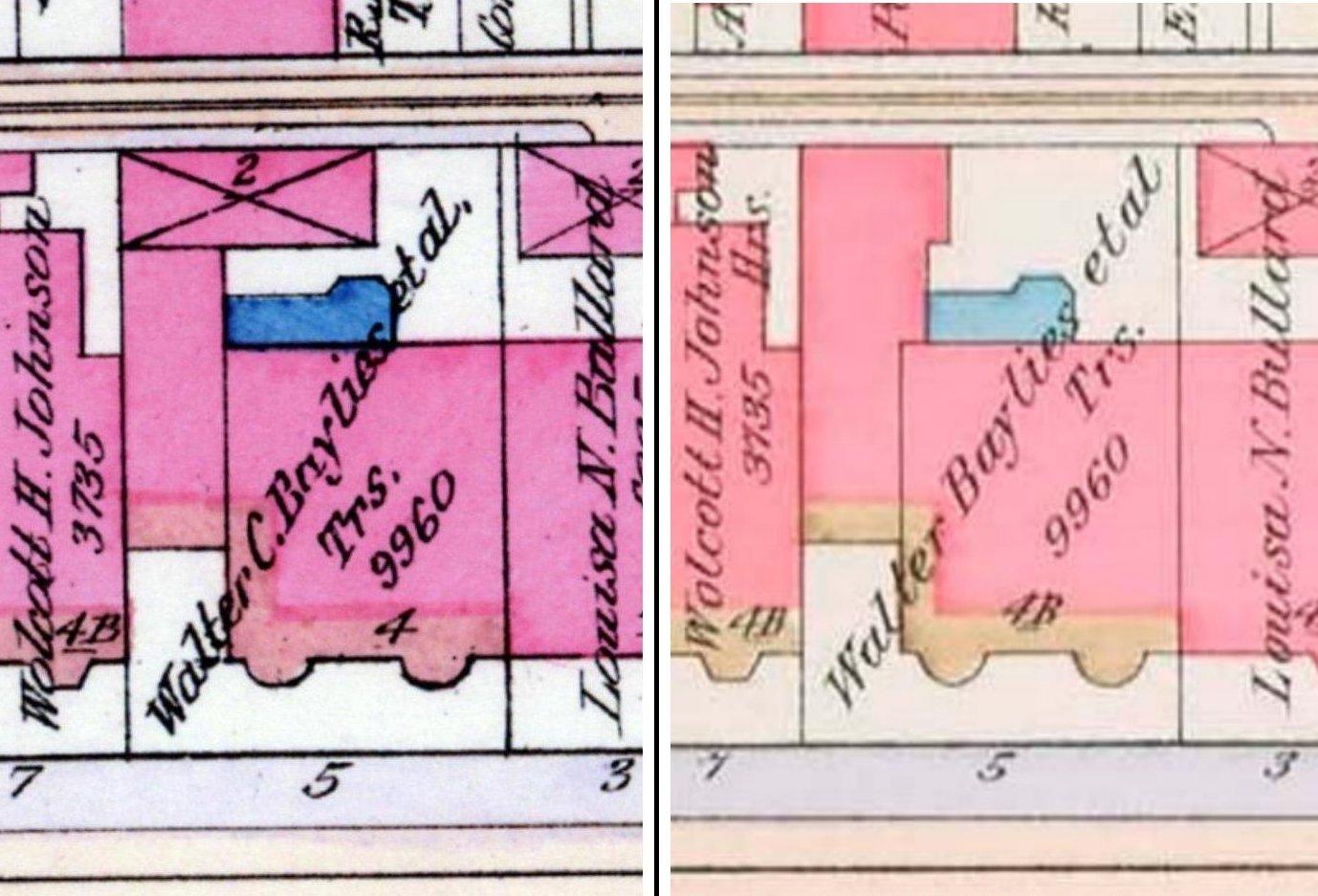
1908 and 1912 Bromley maps, showing expansion of ballroom where stable formerly was located
In 1909, the ballroom was rebuilt and expanded into the area where the stable previously was located, with the work designed by Parker, Thomas, and Rice (successors to Peters and Rice; Arthur Rice had designed the original ballroom for the Baylieses). Architectural plans of the ballroom (dated May 1, 1909) – including elevations, floor plans, and foundation plans – are included in the City of Boston Blueprints Collection in the Boston City Archives (reference BIN A-76).
A November 11, 1973, Boston Globe article by Margaret Logan on the Baylies family and 5 Commonwealth indicates that the ballroom was completed In time for their daughter, Charlotte’s, debut in December of 1912. This is repeated in an interview with the Baylieses’ grandson, Richard Schulze, quoted in the Boston Courant on December 1, 2007 (and again on March 6, 2009), indicating that the “grand ballroom was completed in 1912 for the debutante ball” for Charlotte Baylies. Inasmuch as the ballroom annex was built as part of the 1903 reconstruction of the house, and remodeled and expanded in 1909, it appears that any work done in 1912 would have been another interior remodeling.
Walter and Charlotte Baylies raised their six children at 5 Commonwealth and in Taunton: Lincoln Baylies, Charlotte Baylies, George Upham Baylies, Walter Ray Baylies, Edmund Baylies, and Ruth Baylies. George and Walter Baylies were twins.
Lincoln Baylies was associated with his father’s wholesale dry goods business. He married in June of 1920 to Mary Beatrice Ballard of Louisville, after which they moved to New York City. They returned to Boston by 1922 to live briefly at 8 Gloucester and then at 315 Commonwealth.
Charlotte Baylies married in May of 1918 to Dr. Randall Clifford, a physician. After their marriage they lived at 636 Beacon.
George Upham Baylies, a salesman (and later sales manager) with the American Can Company, married in November of 1933 to Jacquelyn Hartford. After their marriage they lived at 323 Beacon,
Walter Ray Baylies married in October of 1927 to Elizabeth Robinson Allen of Pittsburgh. After their marriage they lived in Taunton. From 1934 to 1942 he served as a member of the Massachusetts House of Representatives, and later served in various state government positions.
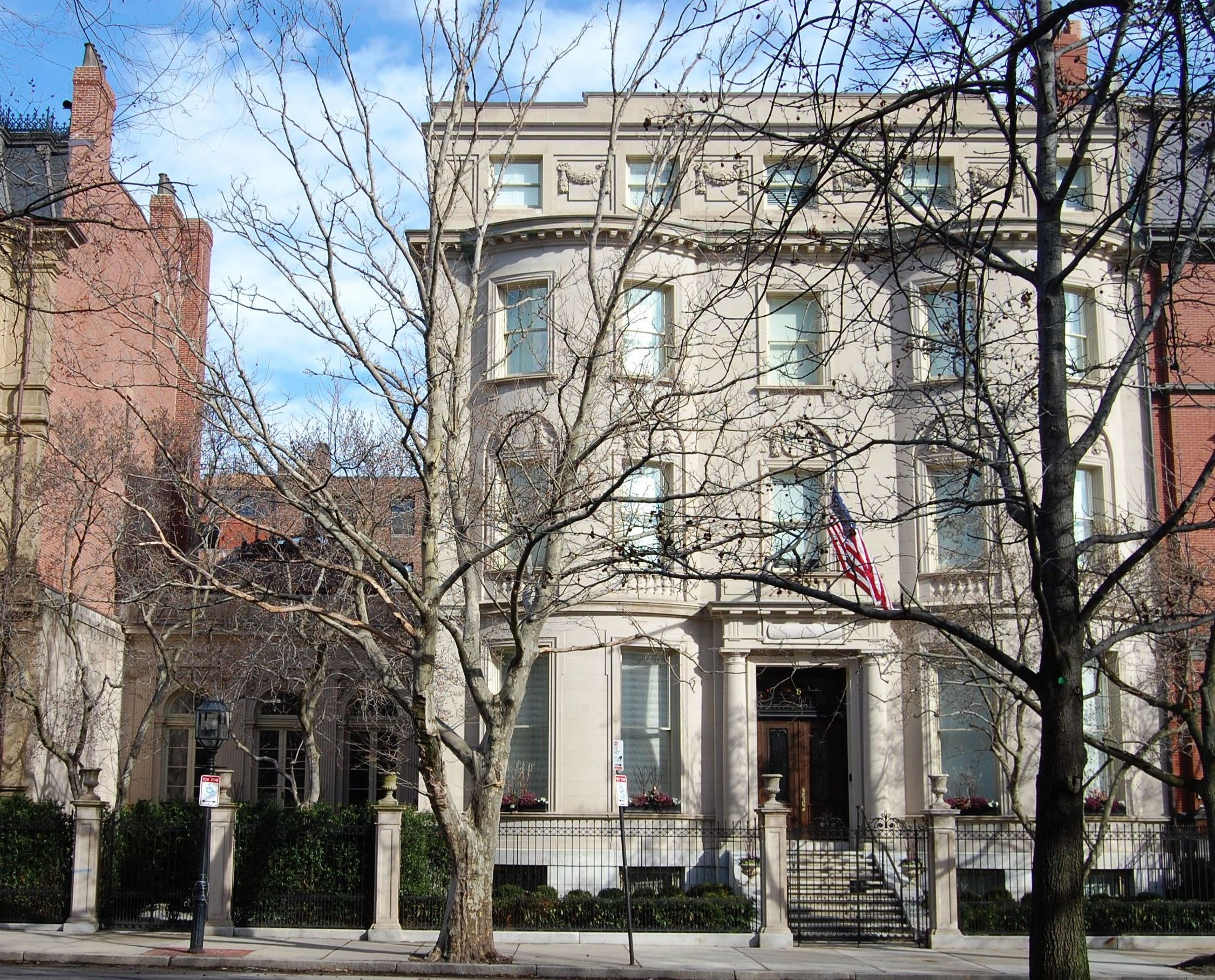
5 Commonwealth, with ballroom to the west (2013)
Edmund Baylies was an actor, stage designer, and director. He lived at 5 Commonwealth and in Taunton when he was not in New York City. He was unmarried.
Ruth Baylies married in February of 1933 to Ludwig Frederick Maria Schulze, founder and president of the American Needle Crafts Company. They lived in New York after their marriage.
Walter Baylies died in May of 1936. After his death, 5 Commonwealth was closed and Charlotte Baylies lived at the Ritz-Carlton Hotel during the winter and at their Taunton home in the summer. She died in April of 1939.
5 Commonwealth continued to be owned by the trust established under George P. Upham’s will and, on December 15, 1939, the trustees transferred the property to Ralph G. Coburn, an attorney, for the benefit of the Baylieses’ six children, and on March 1, 1940, they transferred the property to the New England Trust Company as trustees of the Baylies Real Estate Trust.
In the spring of 1941, 5 Commonwealth was purchased from the Baylies Real Estate Trust by the Boston Center for Adult Education (BCAE), formerly located at 79 Mount Vernon. In June, it held its first classes at 5 Commonwealth, and on August 1, 1941, it took title to the property. The formal opening was during the last week of September of 1941.
In 1982, the BCAE dedicated 5 Commonwealth as the Sarah B. and Clarence J. Gamble building in honor of benefactors Dr. Clarence James Gamble and Sarah Merry (Bradley) Gamble of Milton.
In 2008, the BCAE sold 5 Commonwealth to former real estate executive Christopher Egan and moved to 122 Arlington.
In August of 2008, the 5 Commonwealth Realty Trust (Joseph R. Jenkins, trustee) applied for (and subsequently received) permission to remodel the house and convert it back into a single-family dwelling, including adding an interior garage below the ballroom. On February 17, 2009, the BCAE conveyed the property to the trust. On October 31, 2014, the trust sold 5 Commonwealth to the 5 Commonwealth Mortgage Trust (Joseph R. Jenkins and Christopher F. Egan, trustees).
5 Commonwealth was assessed as single family dwelling in 2023.
-
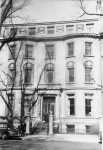
- 5 Commonwealth (ca. 1942), photograph by Bainbridge Bunting, courtesy of The Gleason Partnership
-
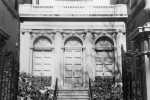
- 5 Commonwealth ballroom (ca. 1942), photograph by Bainbridge Bunting, courtesy of The Gleason Partnership
 Back Bay Houses